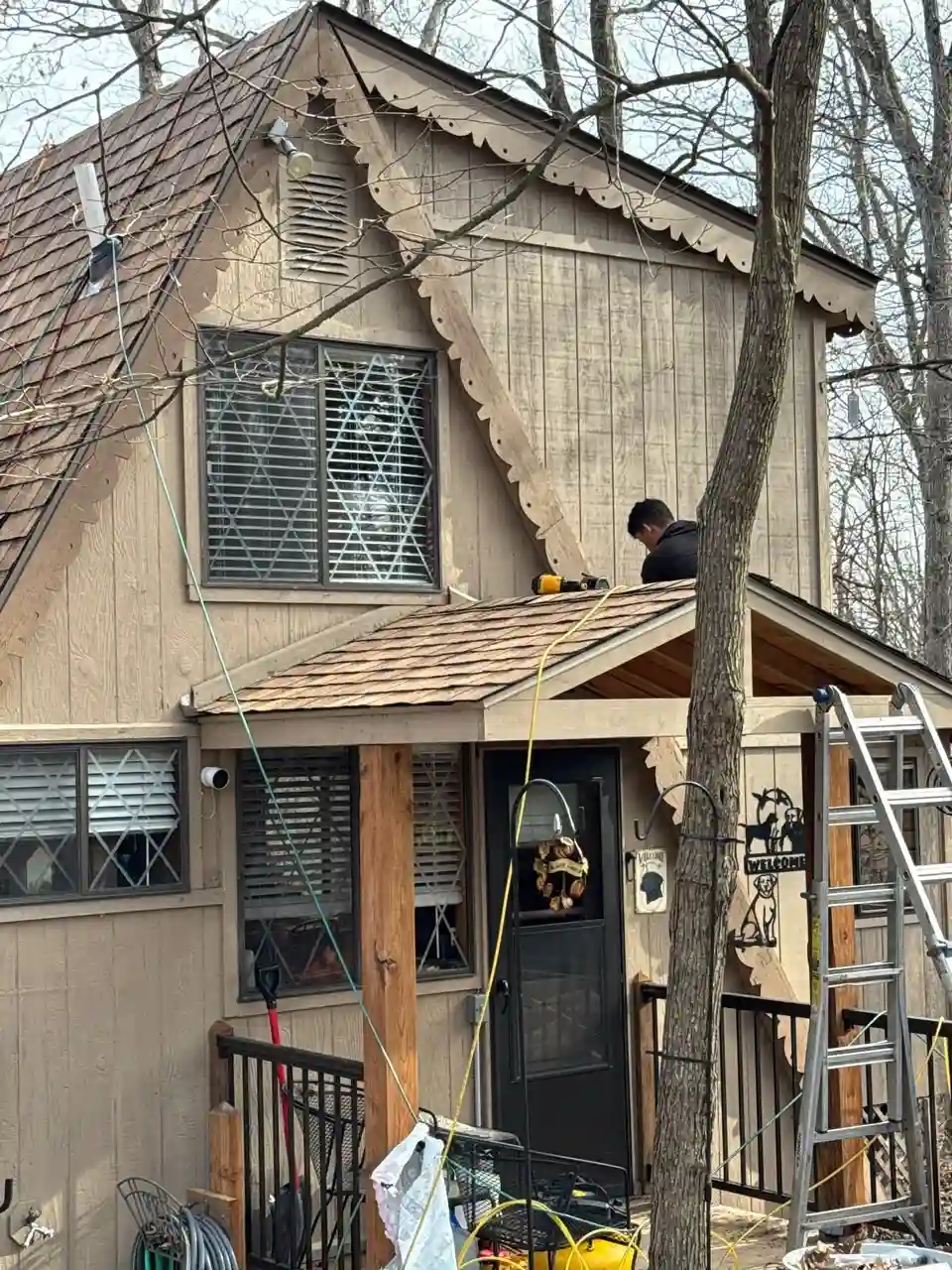
Fascia and soffit can be repaired when rot is limited to a few feet and the wood behind is sound; once rot runs along a whole eave, or the soffit is sagging, replacement is cheaper than chasing it. Most homeowners in our area spend a few hundred dollars on a spot repair and roughly $6 to $20 per linear foot for full replacement, depending on material.
This guide covers what the two pieces do, the signs each one gives when it is failing, how to choose between wood, vinyl, and aluminum, and how the gutters and attic ventilation tie into the decision.
What soffit and fascia do
The fascia is the vertical board that runs along the edge of the roof, right behind the gutter. It caps the ends of the rafters, gives the gutter something to hang on, and closes the gap that would otherwise let rain and animals into the attic. The soffit is the horizontal underside of the overhang. Its job is ventilation: perforated soffit panels let cool air into the attic, which exits at the ridge. That airflow is what keeps a Missouri attic from cooking shingles in July and building ice dams in January (our guide to roof ventilation in Missouri explains how ridge vents and soffit intake work together).
Because they sit at the edge where roof, gutter, and wall meet, these two pieces take the first hit from every failure around them: an overflowing gutter, a short drip edge, a roof leak at the eave, or a woodpecker looking for insects in damp wood.
Signs of damage
- Peeling or bubbling paint on the fascia. Almost always moisture behind the paint, not a paint problem.
- Soft wood. Press a screwdriver into the fascia near the gutter hangers and the corners. If it sinks in, rot has started.
- Gutters pulling away. Hangers are screwed into fascia. When the board rots, the gutter sags, overflows, and rots the board faster.
- Sagging or stained soffit panels. Water pooling in the soffit means the drip edge or gutter is sending water backward, or the roof is leaking at the eave.
- Holes and nests. Squirrels, birds, and wasps go straight for soft fascia and gaps in soffit. Once they are in the attic the cost multiplies.
- Attic heat and frost. Blocked or painted-over soffit vents show up as an attic that runs hot in summer and grows frost on the nails in winter.
Why rooflines fail in Missouri
Three causes account for most of what we replace. First, gutter problems: clogged, undersized, or badly pitched gutters spill water over the back edge onto the fascia every storm. Second, missing or short drip edge: without a metal drip edge extending past the fascia, water clings to the shingle edge and wicks into the board. Third, original builder-grade wood: pine fascia with a coat of paint and no primer on the back lasts about 10 to 15 years here, less on the north side and under trees.
The lesson is that replacing rotten fascia without fixing the water source just schedules the next replacement. A good estimate looks at the drip edge and the gutters at the same time, and our seamless gutter guide explains why sizing and pitch matter.
Repair or replace?
Repair makes sense when rot is confined to one or two sections, typically at a corner or under a valley, and the rafter tails behind the fascia are solid. The rotten length is cut out, new primed board is scarfed in, and the gutter is re-hung. Replace the run when:
- Rot shows up in three or more places along the same eave.
- The rafter tails or sub-fascia are soft. That is structural and needs to be exposed and repaired before any new trim goes on.
- The soffit is sagging or has been patched with mismatched pieces.
- You are replacing the gutters or the roof anyway. The labor overlaps, and new gutters on rotten fascia is money wasted.
- The house still has unvented solid soffit and the attic has moisture or ice-dam problems.
Materials compared
- Wood (primed pine, cedar, or composite). Traditional look, easy to repair in sections, but wood needs paint every 5 to 8 years and is the material most likely to rot again. Pre-primed and back-primed boards last noticeably longer.
- Aluminum fascia wrap over wood. The most common upgrade: a new or sound wood fascia is capped with color-matched aluminum coil. No painting, and it seals the gutter edge. The wood underneath must be dry and solid first.
- Vinyl soffit. Perforated or solid vinyl panels are inexpensive, never need paint, and are the standard replacement soffit. Aluminum soffit costs more and holds up better to heat and impact.
- Fiber cement or PVC trim boards. Rot-proof fascia options at a higher material cost, worth it on shaded, damp elevations where wood keeps failing.
If you are also planning a siding replacement, match soffit and fascia to the new siding system so the trim colors and profiles line up.
What it costs
Typical ranges for our area, installed:
- Spot fascia repair (one section, re-hang gutter): $250 to $600.
- Fascia replacement, wood: $6 to $12 per linear foot.
- Aluminum fascia wrap: $8 to $15 per linear foot.
- Soffit replacement, vinyl or aluminum: $8 to $20 per linear foot depending on overhang depth.
- Rafter tail or sub-fascia repair: add $50 to $150 per rafter affected.
A typical ranch home with 160 feet of eave lands somewhere between $2,500 and $5,500 for full soffit and fascia replacement in aluminum and vinyl, more with structural repair or if gutters are replaced at the same time. Every estimate from A&S Contracting Services is free, written, and itemized, and because we self-perform roofing, gutters, soffit, and fascia, the roofline gets handled by one crew instead of three.
Roofline showing rot?
A&S Contracting Services repairs and replaces soffit, fascia, and gutters as one job across Warrenton and Warren County. Free, itemized written estimate.
Call (636) 359-7204Frequently asked questions
Can you replace fascia without removing the gutters?
No. The gutter hangs on the fascia, so it has to come down and be re-hung, and this is the right moment to check its pitch and hangers. If the gutters are old, replacing them in the same visit is usually the cheaper path.
Do I need vented soffit?
Almost every house with an attic does. Intake air at the soffit and exhaust at the ridge is how the attic stays close to outside temperature. Solid soffit with no other intake leads to hot attics, shorter shingle life, and ice dams in winter.
How long does soffit and fascia replacement take?
A full replacement on a typical single-story home takes one to two days, including re-hanging or replacing the gutters. Structural rafter-tail repair adds time.
Is fascia damage covered by insurance?
Only when it results from a covered event such as hail, wind, or a fallen limb. Rot from long-term water exposure is considered maintenance and is not covered. Dented aluminum fascia and gutters from hail usually are; see our hail damage claim guide.