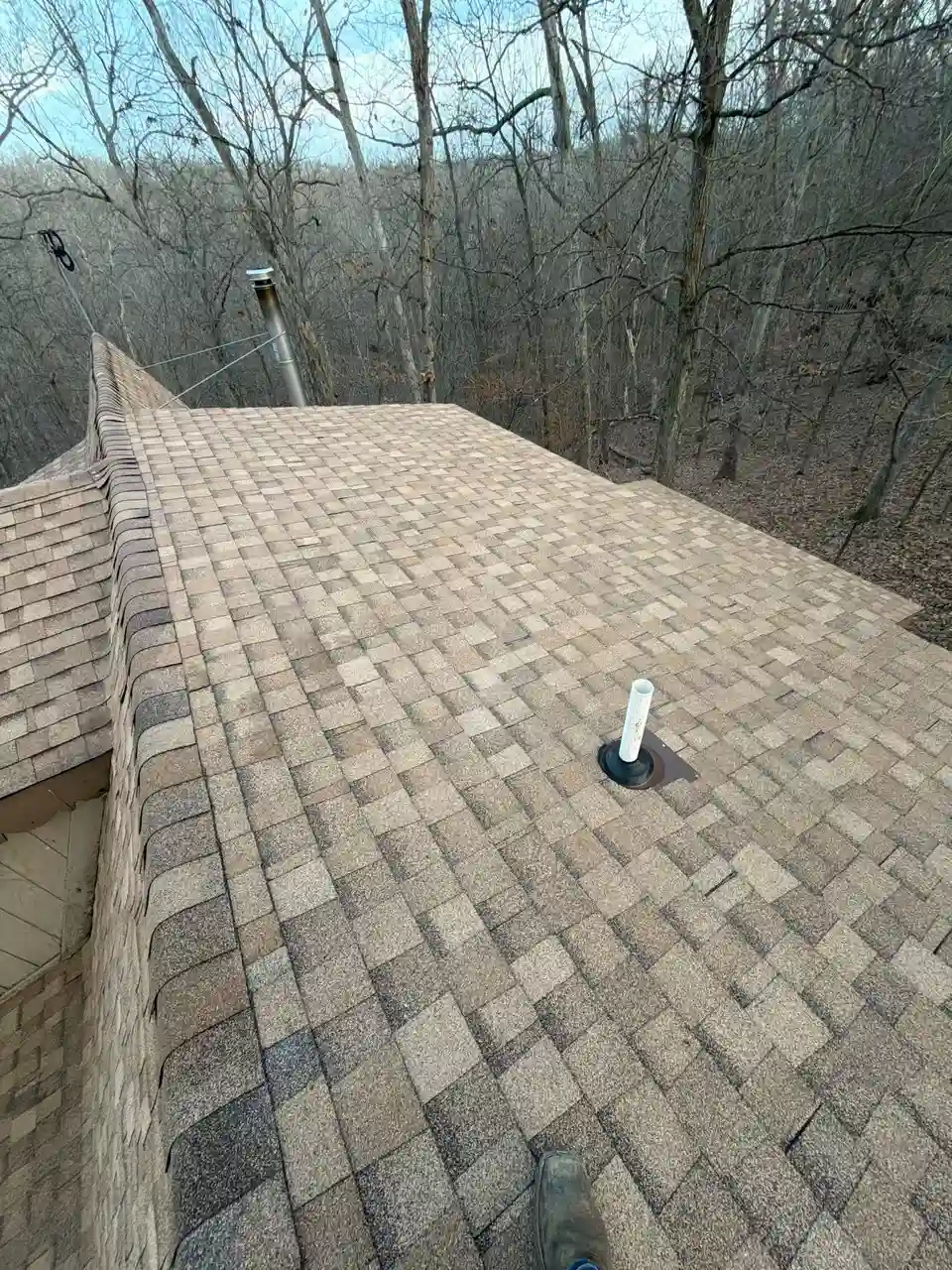
Class 4 impact-resistant shingles are worth the upfront premium in Missouri if you plan to stay in your home at least 5 to 10 years and your insurer offers a meaningful discount. Warren County and much of central Missouri sit in a hail belt that produces damaging storms most years. A Class 4 roof can survive repeated two-inch hail strikes that would total a standard roof, and the insurance discount—typically 10 to 35 percent off your annual premium—often recovers the material upgrade cost within a decade.
This guide explains how the UL 2218 impact rating system works, what separates Class 4 from standard shingles, how to qualify for the insurance discount, and the situations where the investment makes the most sense.
What Class 4 actually means
Class 4 is the highest rating in the UL 2218 impact resistance test, a standard published by Underwriters Laboratories that measures how well roofing materials withstand simulated hail strikes. Shingles, metal panels, tile, and other products can earn a UL 2218 rating; asphalt shingles are the most common application.
The classification runs from Class 1 (lowest) to Class 4 (highest). Most standard three-tab and architectural asphalt shingles fall into Class 3. A Class 4 shingle is engineered with a reinforced mat or polymer-modified asphalt that absorbs impact energy without cracking or tearing.
The rating is based on lab performance, not a warranty against hail damage. A Class 4 roof can still sustain damage from extreme hail events—golf-ball or baseball-sized stones—but the threshold where failure occurs is substantially higher than a standard roof.
How impact resistance is tested
The UL 2218 test drops a two-inch steel ball from increasing heights onto sample shingles mounted on a deck. Each class corresponds to a drop height that the shingle must survive without cracking on the top surface or tearing on the underside:
- Class 1: 12 feet (approximately nickel-sized hail)
- Class 2: 15 feet (approximately quarter-sized hail)
- Class 3: 17 feet (approximately walnut-sized hail)
- Class 4: 20 feet (approximately two-inch or golf-ball-sized hail)
The shingle is struck twice in the same spot. If the surface does not crack and the mat does not tear, it passes. A Class 4 shingle passes the 20-foot drop test. Warren County regularly sees severe storms with hail in the one- to two-inch range, the threshold where standard shingles start to fail and Class 4 products hold up.
Class 4 vs standard shingles
Standard architectural shingles rely on a fiberglass mat saturated with asphalt and covered with ceramic granules. A Class 4 shingle uses one or more of the following enhancements:
- Polymer-modified asphalt (SBS or similar): A rubber-like modifier that gives the mat flexibility and impact absorption. The shingle bends slightly on impact instead of cracking.
- Reinforced mat: A thicker or woven fiberglass core that resists tearing under point loads.
- Impact-resistant backing layer: Some products add a rubberized layer underneath the shingle to cushion the deck.
From the curb, a Class 4 shingle looks identical to a standard architectural shingle. The difference is invisible from the ground and only apparent in lab testing or after a hail event. Major manufacturers—CertainTeed, GAF, Owens Corning, and others—all offer UL 2218 Class 4 lines that match their standard shingle profiles and color palettes.
What the upgrade costs
Class 4 shingles typically add 10 to 20 percent to the material cost compared to standard architectural shingles of similar style and warranty length. Because material is only part of the total installed price—tear-off, decking repair, underlayment, flashing, labor, and disposal make up the rest—the total installed cost increase on a typical Warren County roof replacement is usually closer to 8 to 15 percent.
The actual number depends on roof size, pitch, and whether you are overlaying or tearing off. A roofer quoting from a free on-site measurement will price the standard and Class 4 options side by side so you can weigh the premium against the projected insurance savings. Our Missouri roof replacement cost guide breaks down the per-square drivers across material tiers.
The insurance discount
Most Missouri homeowners insurers offer a discount for Class 4 roofing. The discount amount varies by carrier and sometimes by county, but typical ranges run from about 10 percent to 35 percent off the dwelling coverage or total premium. A few insurers in high-hail areas will not write new policies on homes with standard roofs at all—they require Class 4 for binding coverage.
The discount is not automatic. You need to notify your agent or underwriter before the roof is installed, confirm the discount percentage in writing, and submit proof of the Class 4 rating after installation. Proof typically means a copy of the shingle manufacturer's spec sheet showing UL 2218 Class 4 certification, or an invoice line item calling out the product by name.
Because the discount compounds every year you own the home, even a modest percentage can recover the material premium within five to ten years. If you stay in the house past that break-even point, the discount is pure savings. And because a Class 4 roof reduces the likelihood of a hail claim, some insurers are more willing to renew policies or offer better rates on homes with impact-resistant roofing.
When Class 4 shingles pay off
Class 4 impact-resistant shingles make the most financial sense when several factors align:
- You plan to stay in the home at least 5 to 10 years. The payback period depends on the insurance discount and the cost premium; if you sell before the discount recovers the upgrade, the next owner gets the benefit.
- Your insurer offers a meaningful discount. A 5 percent discount on a low-premium policy takes decades to pay off; a 25 percent discount on a policy that already runs high recovers the cost quickly. Ask your agent for the exact percentage before committing.
- Your area sees frequent hail. Warren County, St. Charles County, and much of central Missouri see damaging hail storms most years. If your roof has already been replaced once from hail, the odds of a second event within the next 15 to 20 years are high enough that the impact rating becomes real protection, not just a discount.
- You want to avoid another hail claim. Filing a second or third hail claim can lead to non-renewal or steep rate increases. A Class 4 roof reduces the chance that a future storm produces enough damage to justify a claim, which keeps your claims history cleaner.
- You are replacing the roof anyway. The cost difference is smallest during a planned tear-off and replacement, when you are already paying for labor, decking inspection, and disposal. Retrofitting an existing roof just for the impact rating rarely pencils out.
If your roof is nearing the end of its life and you live in a hail-prone area, the upgrade is worth pricing. A&S Contracting Services includes both standard and Class 4 options on every roofing estimate so you can see the real numbers and decide based on your timeline and insurer's discount.
Pricing a new roof with Class 4 shingles?
A&S Contracting Services quotes standard and impact-resistant shingle options side by side on every roof replacement in Warren County and surrounding areas. Every estimate is free, written, and includes the manufacturer spec sheet you need for your insurer.
Call (636) 359-7204Frequently asked questions
How much do impact-resistant shingles add to a roof replacement?
Class 4 shingles typically add 10–20% to the material portion of a roof replacement compared to standard architectural shingles. Because labor is the larger share of a tear-off and re-roof, the total installed cost increase is usually closer to 8–15% on a typical Warren County home. The insurance discount often recovers the premium within 5 to 10 years.
Will my insurance company really give me a discount?
Most Missouri insurers offer a discount for Class 4 roofing, but the amount varies by carrier. Discounts range from about 10% to 35% off the dwelling or total premium. The discount is not automatic—call your agent before the roof goes on, confirm the percentage, and send a copy of the shingle spec sheet or invoice showing UL 2218 Class 4 certification once the job is complete.
Do Class 4 shingles look different from regular shingles?
No. Class 4 impact-resistant shingles are available in the same color palettes and profiles as standard architectural shingles. The impact rating comes from a reinforced mat or polymer-modified asphalt underneath the surface granules, not a different look from the curb.
Are Class 4 shingles hail-proof?
Not hail-proof, but hail-resistant. A Class 4 shingle survives repeated two-inch steel ball strikes without cracking or tearing in the UL 2218 test. That translates to surviving most Missouri hail storms with minimal or no damage. Baseball-sized hail or larger can still cause failure, but the threshold is far higher than a standard Class 3 shingle.
Does A&S install Class 4 impact-resistant shingles?
Yes. A&S Contracting Services installs Class 4 shingles across Warren County and surrounding areas whenever a homeowner wants the insurance discount, plans to stay in the house long-term, or lives in a neighborhood that sees frequent hail. We provide the manufacturer spec sheet and UL 2218 certification with every installation so your insurer can process the discount.