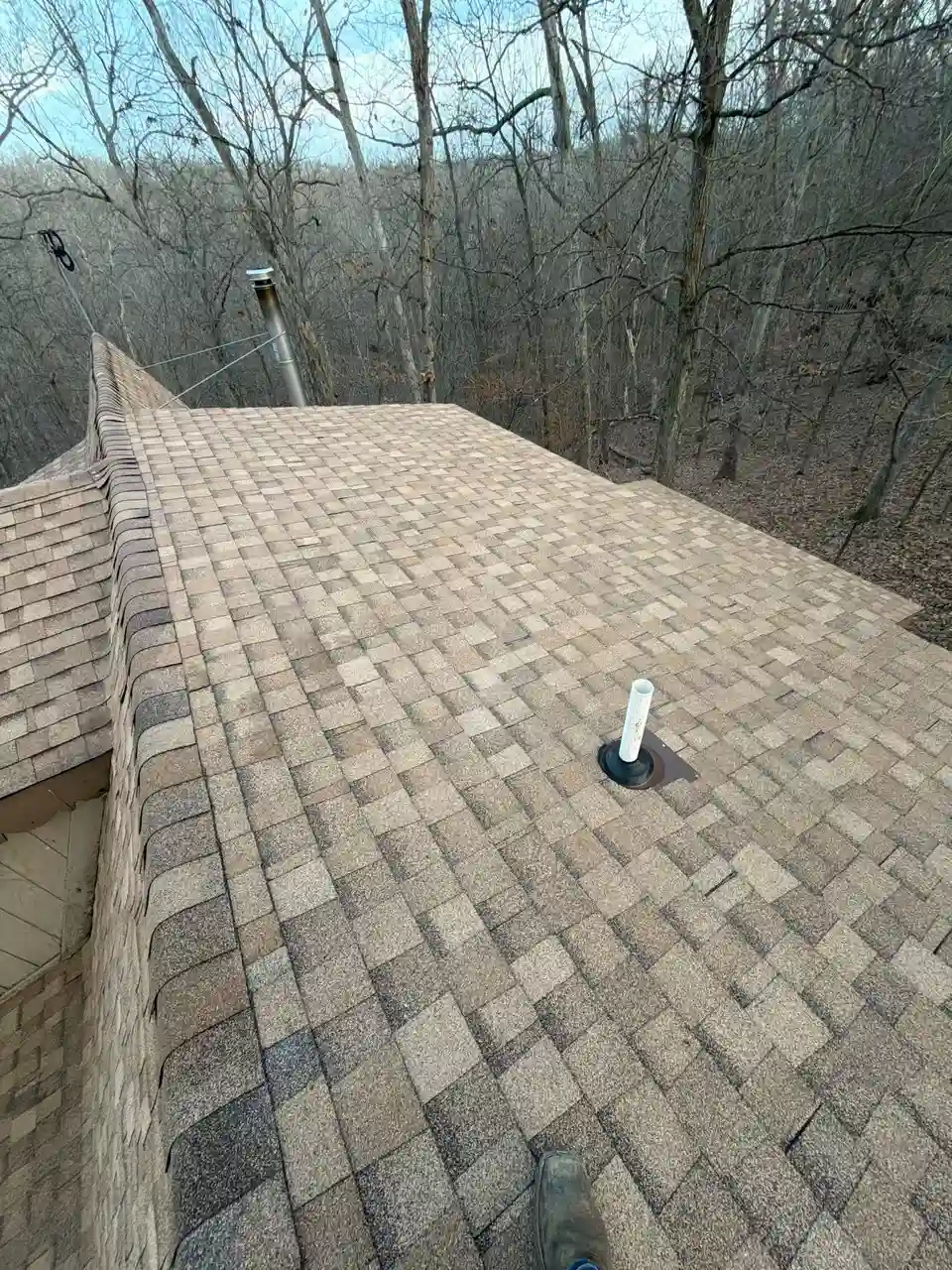
Hail damage on an asphalt roof shows up as soft, dark bruises where granules were knocked loose, not as obvious holes. A roof can look fine from the ground and still be failing. If a storm dropped hail near an inch or larger, get a documented inspection within a few weeks, then file with your insurer before the policy's reporting window closes.
Below is the inspection method roofers use, the claim process as it runs in Missouri, and the handful of decisions that determine whether you end up with a paid replacement or a denied claim and an out-of-pocket roof.
What hail actually does to a roof
An asphalt shingle is a fiberglass mat coated in asphalt and topped with ceramic granules. The granules are the UV shield. When hail hits, it crushes the mat and knocks granules loose in a roughly circular bruise. The shingle does not leak that day. Over the next one to three years, sun breaks down the exposed asphalt, the bruise cracks, and the leak arrives long after anyone remembers the storm.
That delay is why insurers set reporting windows and why "it isn't leaking" is not a reason to skip an inspection. It is also why a bruise found in year two is much harder to get covered: the insurer will argue the roof simply aged.
Size matters. Pea-sized hail rarely hurts a roof in decent condition. Quarter-sized (about one inch) is the common threshold where damage starts. Golf-ball hail and larger can damage almost any roof, and also dents gutters, soffit, fascia, and siding, which are often part of the same claim.
What you can check from the ground
You do not need to climb to find the first evidence. After a storm, walk the property and look at:
- Gutters and downspouts: dents on the top surfaces, and a heavy wash of granules at the downspout outlets.
- Soft metals: the AC condenser fins, mailbox, metal vent caps, and window screens. Hail that dents these was big enough to bruise shingles.
- Siding and window trim: chips and cracks on the side the storm came from.
- Deck and patio furniture: spatter marks where hail cleaned the surface.
- The roof line from the street: missing shingles, exposed black spots, or granules pooled in valleys.
Photograph all of it with the date visible. Collateral damage on the property is what convinces an adjuster the storm was real and severe at your address.
What a proper hail inspection covers
Adjusters use a "test square": a 10 by 10 foot area on each roof slope, counting the hail hits inside it. Many carriers treat roughly eight or more hits per square on a slope as replacement-level damage for that slope. A contractor's inspection should mirror this so the two reports agree. Expect the inspector to:
- Chalk and photograph test squares on every slope, not just the side facing the storm.
- Distinguish hail bruises (random, soft, circular) from blisters, foot traffic, and manufacturing defects.
- Check ridge caps, pipe boots, vents, and flashing, which are often the first pieces to fail.
- Document gutters, downspouts, soffit, fascia, siding, and screens.
- Give you a written report with photos before anyone calls the insurer.
A&S Contracting Services documents storm and hail damage this way for homes across Warrenton, Wright City, Troy, Wentzville, and Washington. If the roof does not have claim-level damage, we will tell you that too. A denied claim on your record helps nobody.
The Missouri insurance claim, step by step
- Read the policy. Note the deductible (many Missouri policies now carry a separate wind and hail deductible of 1 to 2 percent of the dwelling value), the reporting deadline, and whether you have replacement cost or actual cash value coverage.
- Get the inspection and report. Before you call the carrier, so you know what you are claiming.
- File the claim. Date of loss, a summary of the damage, and your photos. Ask for the claim number and the adjuster's contact.
- Meet the adjuster on the roof. Have your contractor present. Two sets of eyes on the same test squares avoids a lowball first estimate.
- Review the adjuster's scope. Compare line by line with your contractor's estimate: slopes, accessories, gutters, decking allowance, code upgrades like ice-and-water shield.
- Supplement if needed. Missed items are corrected with a supplement request backed by photos. This is normal, not adversarial.
- Schedule the work. With replacement cost coverage, the carrier typically pays the depreciated amount first and releases the balance after the job is complete and invoiced.
Missouri law requires the homeowner, not the contractor, to negotiate with the insurer unless a licensed public adjuster is hired. A contractor who offers to "handle the whole claim" is a red flag. Documentation and a clear scope are the legitimate help.
Mistakes that get claims denied
- Waiting too long. A year-old bruise looks like wear. Inspect within weeks, file within the policy window.
- Signing a door-knocker's contract. Storm chasers who arrive the day after a storm often lock you into an assignment of benefits or a contract before any inspection. Verify Missouri licensing and local references; ask where the crew will be in five years when the warranty matters.
- Letting the roof be walked by too many people. Foot traffic on hot shingles creates scuffs that muddy the hail evidence.
- Accepting a repair-only scope on a roof that does not match. Discontinued shingle colors and a patchwork of new and old are a legitimate argument for slope or full replacement under many policies.
- Offering to waive the deductible. A contractor who "eats" your deductible is committing insurance fraud in Missouri. Walk away.
Repair, replace, or wait?
If damage is confined to a few shingles and the roof is otherwise young, a repair is honest and cheap; see our roof leak repair guide for what that scope looks like. If test squares show claim-level bruising on most slopes, replacement is the right answer and the insurer will usually agree. What we do not recommend is waiting: a bruised roof does not heal, and the claim only gets harder. For the numbers on a full tear-off, our roof replacement cost guide covers materials, tear-off, and what to look for in a quote. Impact-resistant (Class 4) shingles are worth pricing on any replacement in this part of Missouri; many carriers discount the premium for them.
Storm just came through?
A&S Contracting Services inspects and documents hail and wind damage for homeowners across Warren County. Free written estimate, photos you can send straight to your adjuster.
Call (636) 359-7204Frequently asked questions
How soon after a hail storm should I get my roof inspected?
Within a few weeks. Bruises are easiest to identify while granule loss is fresh, and most Missouri policies expect the loss reported promptly. Waiting a year turns a clear hail claim into an argument about wear and tear.
Will filing a hail claim raise my insurance rates?
Weather claims are generally treated as "acts of God" and are less likely to raise your individual premium than a liability or negligence claim, but carriers do adjust regional rates after major storm seasons. Ask your agent how your carrier handles it before filing.
What if the adjuster says there is no damage but my contractor says there is?
Request a re-inspection and have your contractor attend with photos of chalked test squares. If the two reports still disagree, the policy usually allows an appraisal process. Do not sign a release until the disagreement is resolved.
Does A&S handle the insurance claim for me?
We document the damage, provide a detailed written estimate, and meet the adjuster on site. Missouri law does not allow a contractor to negotiate the claim itself; that stays between you and the carrier, or a licensed public adjuster if you hire one.